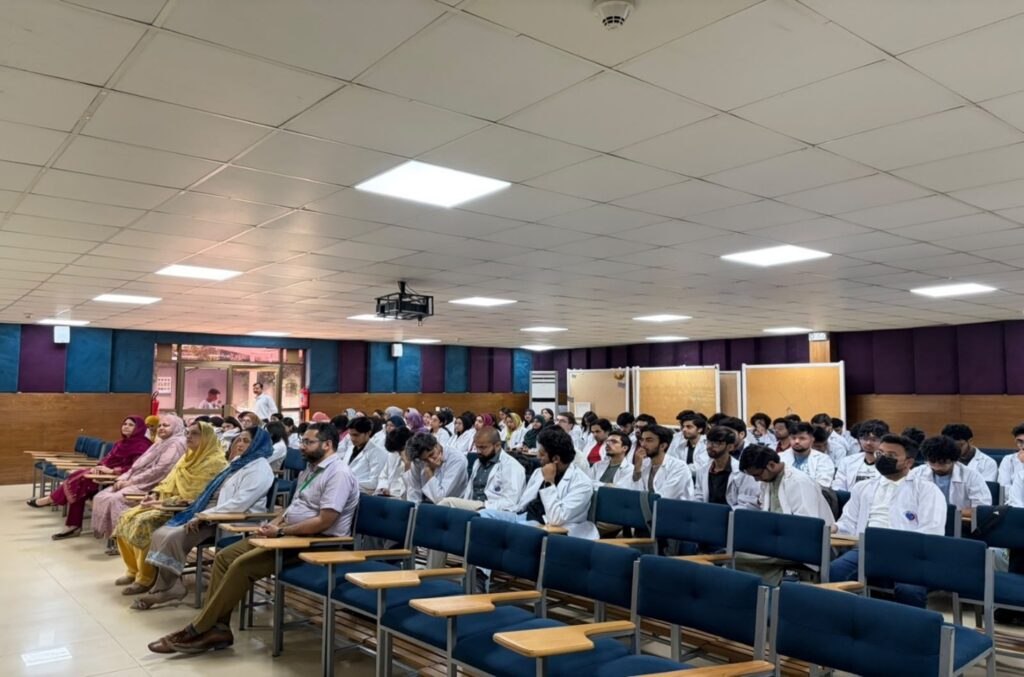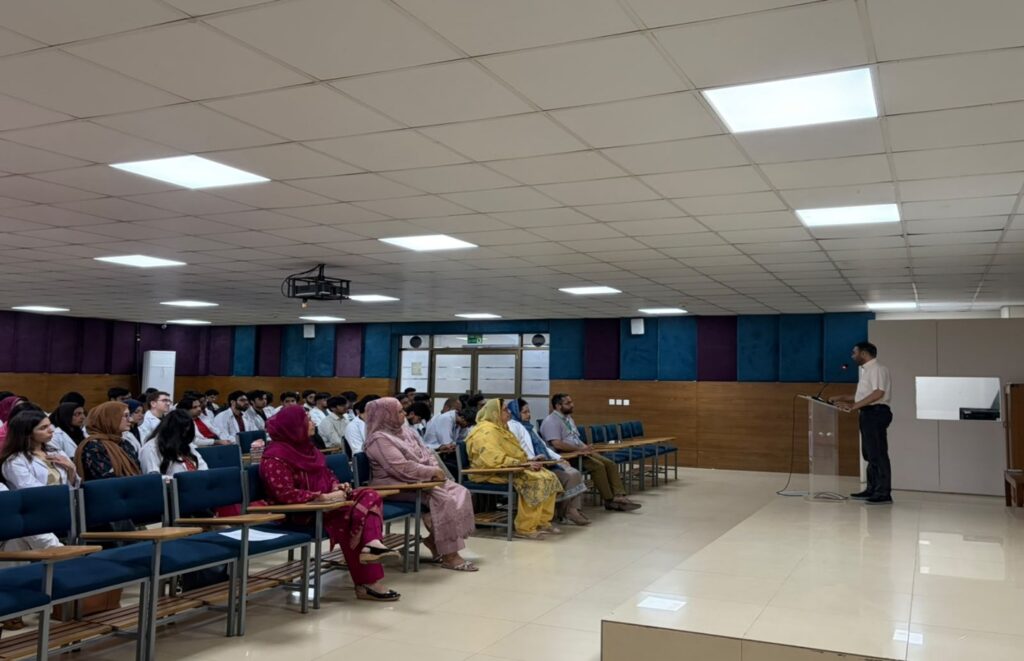
Shifa College of Medicine observed Kashmir Black Day on October 20, 2026, by organising an awareness seminar to highlight the historical, political, and humanitarian dimensions of the Kashmir dispute. This Seminar commemorates the tragic events of October 27, 1947, when the princely state of Jammu and Kashmir acceded to India amid a deeply contested political situation, marking the beginning of a prolonged conflict that continues to affect millions of Kashmiris.
Under the longitudinal theme of Pakistan Studies, the Seminar was organised by Dr. Umme Kulsoom Khattak under the lead of Prof. Dr. Ashraf Hussain. The keynote speaker, Mr. Ahmed Zafar, an eminent educationist, philanthropist, and Director/Chief Executive of the Mishkat Welfare Trust, delivered an impactful talk highlighting the significance of understanding history and learning from its lessons. He emphasised how the Kashmir dispute has affected generations, leaving lasting political, social, and humanitarian consequences, and reflected on the challenges and possibilities that lie ahead. He stressed that meaningful dialogue and table talks remain the most viable path towards a peaceful and sustainable resolution. Addressing the youth, he underscored the importance of historical awareness, critical thinking, and informed engagement, encouraging them to educate themselves so they can lead constructive discussions and contribute meaningfully to future peace efforts.
The closing remarks were delivered by Prof Dr Mohammed Amir, Dean Faculty Health Sciences, who emphasised on the responsibility of the students as informed citizens and future leaders. He reinforced the importance of historical consciousness, peaceful dialogue, and sustained commitment to understanding the Kashmir issue.
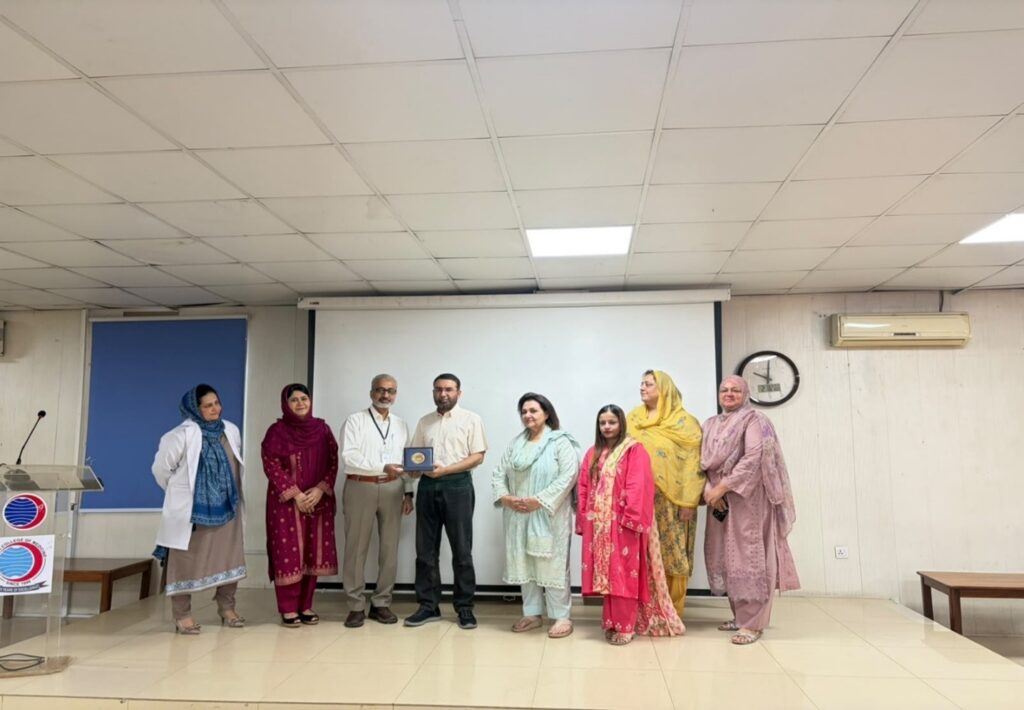
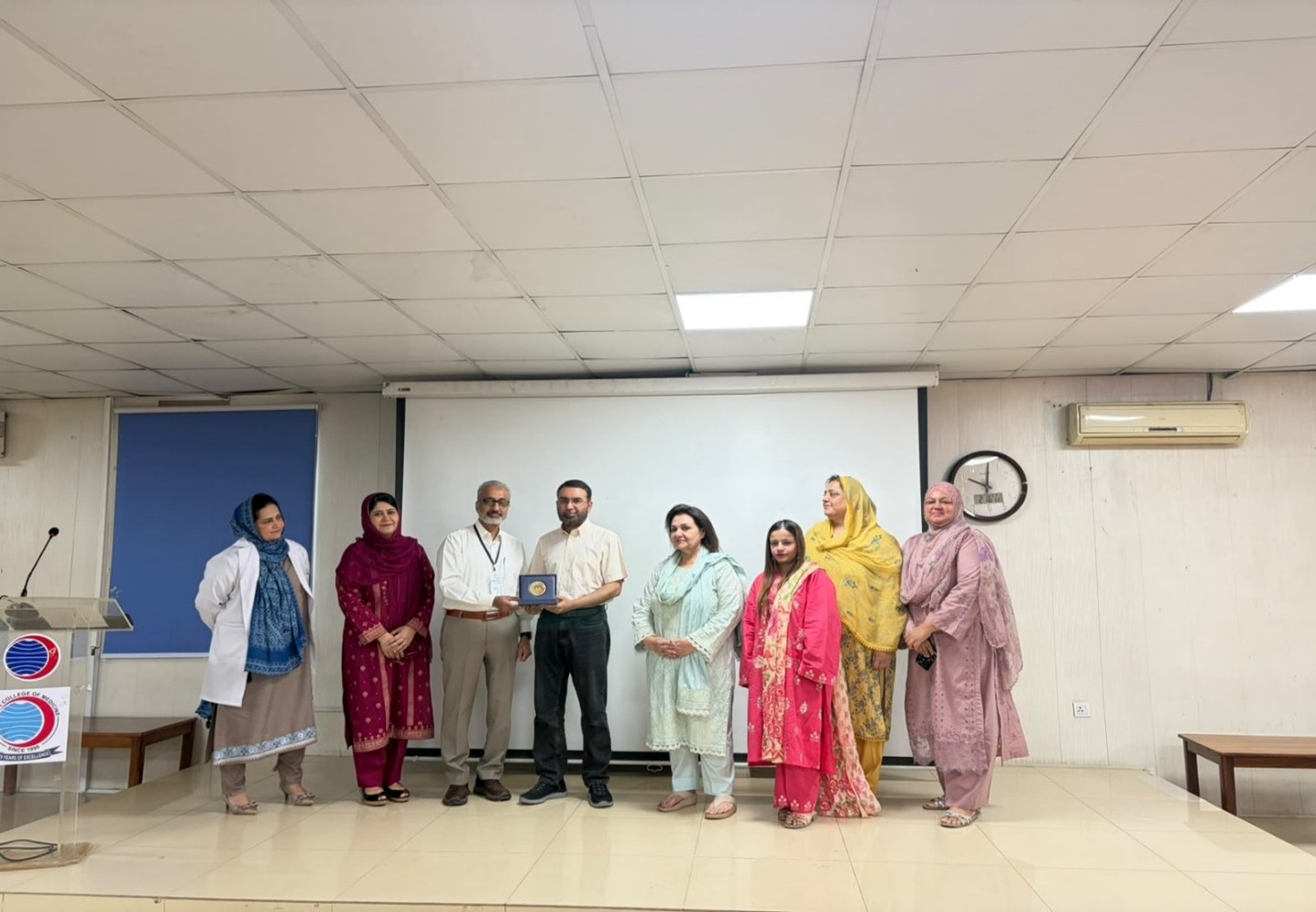
The seminar concluded with the presentation of a commemorative shield to the keynote speaker by the Dean, followed by Dua reaffirming the institution’s commitment to promoting historical awareness, responsible citizenship, and a deeper understanding of issues of national and humanitarian significance.