[email protected] +92-51-884-0600
Department of Shariah and Law

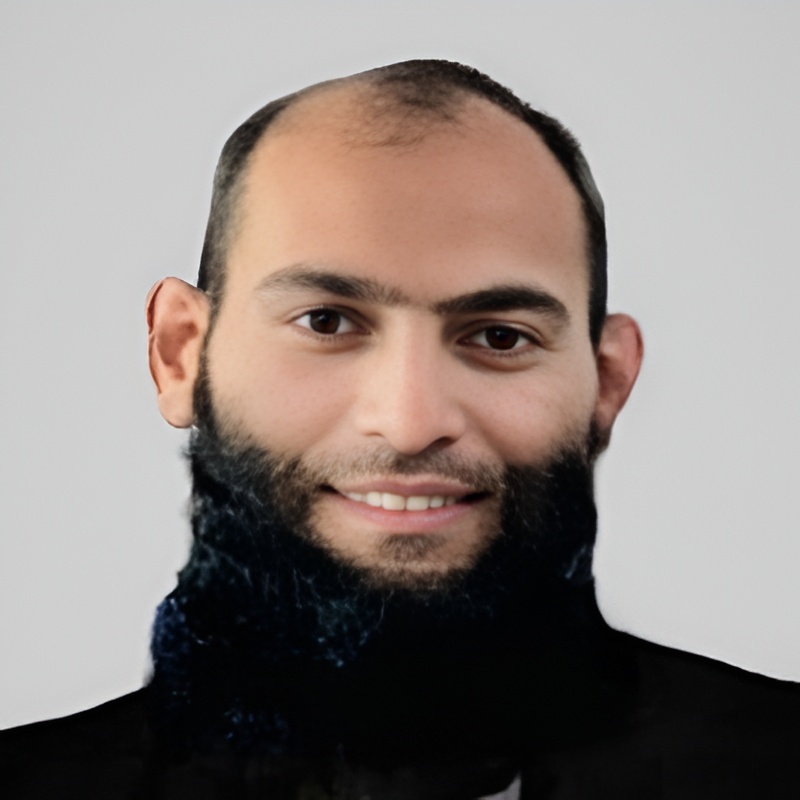
Dr. Muhammad Ashfaq

Ashfaq 1 1 Picsart AiImageEnhancer

Dr. Muhammad Ashfaq

Assistant Professor
Department of Shariah and Law

PROFILE SUMMARY

Dr. Muhammad Ashfaq is a distinguished academic, jurist, and legal consultant with over a decade of interdisciplinary experience in Islamic jurisprudence, comparative law, and higher education leadership. He holds a Ph.D. in Comparative Jurisprudence from Al-Imam Muhammad Ibn Saud Islamic University, Riyadh—one of the world’s leading institutions in Islamic legal studies. Currently serving as an Assistant Professor in the Department of Shariah and Law at Shifa Tameer-e-Millat University (STMU), Dr. Ashfaq has demonstrated strong administrative acumen, having served as Head of Department and chairperson of multiple academic committees. His scholarly output is robust and diverse, with 11 peer-reviewed articles published in HEC-recognized Y-category journals covering Islamic finance, constitutional law, criminal justice, human rights, and legal philosophy. He has also served as an external examiner for Ph.D. and LL.M. theses at IIUI and the University of Karachi. Beyond academia, Dr. Ashfaq brings 8 years of practical legal consultation experience with the Pakistani Embassy in Riyadh and is an enrolled Advocate of the Azad Jammu & Kashmir High Court.

EDUCATIONAL QUALIFICATIONS

Degree Discipline / Field Institution Year
Ph.D. Comparative Jurisprudence Al-Imam Muhammad Ibn Saud Islamic University, Riyadh, KSA 2018–2021
Master’s / M.Phil. Comparative Jurisprudence Al-Imam Muhammad Ibn Saud Islamic University, Riyadh, KSA 2013–2016
BS (4 Years) Shariah Islamic Law Al-Imam Muhammad Ibn Saud Islamic University, Riyadh, KSA 2008–2012
Diploma Arabic Language & Islamic Studies Al-Imam Muhammad Ibn Saud Islamic University, Riyadh, KSA 2006–2007
Certificate Arabic Language & Islamic Studies Al-Imam Muhammad Ibn Saud Islamic University, Riyadh, KSA 2004–2006
B.Sc. General Science Azad Jammu & Kashmir University, Muzaffarabad 2002–2004

TEACHING EXPERIENCE

Designation Institution / Organization Duration Experience
Assistant Professor Department of Shariah and Law, STMU June 05, 2023–Present 3 Years
Assistant Professor Department of Law, University of Sialkot Jan 13, 2022–June 03, 2023 1.5 Years
Lecturer (Online) Al-Maarefa University 2020–Present 6 Years
Workshop Resource Person Allama Iqbal Open University 2020–2021 1.6 Years
Tutor (Islamic Jurisprudence) Allama Iqbal Open University 2018–Present 7 Years
Teacher Rawdhah & Sahafah Branches, Riyadh, KSA 2007–2021 11 Years

ADMINISTRATIVE & LEADERSHIP ROLES

Role / Position Department / Body Institution Period
QEC Focal Person Department of Shariah and Law STMU May 16, 2026–Present
Chairperson Examination Committee Department of Shariah and Law STMU Dec 22, 2025–Present
Member University Recruitment & Promotion Committee STMU (Park Road Campus) Dec 10, 2025–Present
Head of Department (HOD) Department of Shariah and Law STMU June 03, 2024–Oct 28, 2024
In-Charge Department Department of Shariah and Law STMU Sept 17, 2023–Feb 08, 2024
Chairperson Admission Committee LL.B. Shariah and Law Program STMU July 24, 2023–Present
Head of Department (HOD) Department of Law University of Sialkot July 26, 2022–June 03, 2023

PRACTICAL LEGAL EXPERIENCE

  • Legal Consultant (Voluntary): Welfare Section, Embassy of Pakistan, Riyadh, KSA (Represented Pakistani community in KSA courts) — March 2013–March 2021 (8 Years, 10 Months)
  • Death Pursuer: Welfare Section, Consulate General of Pakistan, Jeddah, KSA — March 2014–Jan 2015
  • Advocate High Court: Enrolled at Azad Jammu & Kashmir Bar Council

RESEARCH PUBLICATIONS

  1. Ashfaq, M. (2025). Ethics of E-Commerce in Islamic Jurisprudence. Contemporary Journal of Social Science Review, 3(4), 42-55.
  2. Ashfaq, M. (2025). The Constitution of Pakistan as a Living Charter: Navigating Identity, Federalism, and Judicial Empowerment in a Transforming State. The Journal of Research Review, 2(2), 103-111.
  3. Ashfaq, M. (2024). Extradition Treaties and International Law: Balancing Sovereignty. International Journal of Human and Society, 4(2), 650-664.
  4. Ashfaq, M. (2024). Objectives of Islamic Law and Contemporary Issues. Pakistan Journal of Law, Analysis and Wisdom, 3(6), 150-160.
  5. Ashfaq, M. (2023). Unraveling the Threads of Fragility: An In-depth Analysis of the Underpinnings of Weak Democracy in Pakistan and the Path towards Resilience. Pakistan Journal of Law, Analysis and Wisdom, 2(2), 443-455.
  6. Ashfaq, M. (2023). If a Former Prime Minister cannot: How can I? A Bird Eye View of Sec. 154 CRPC and Right to Register a FIR. Journal of Policy Research, 9(1), 323-327.
  7. Ashfaq, M. (2023). Right of Accused in Criminal Investigation in Pakistan. Journal of Policy Research, 9(1), 252-256.
  8. Ashfaq, M. (2022). 18th Amendment: A Tool to Cut the Roots of Strong Federation. Journal of Policy Research, 8(4), 78-80.
  9. Ashfaq, M. (2022). Conventional Insurance. Harf-o-Sukhan, 6(2), 1-6.
  10. Ashfaq, M. (2022). Pragmatic Adaptation in Translation: An Analysis of English and Urdu Versions of Manto’s “The Red Revolution”. Jahan-e-Tahqeeq, 5(2), 1-10.
  11. Ashfaq, M. (2022). Medical check-up before marriage. Jahan-e-Tahqeeq, 5(2), 1-4.

THESIS EVALUATION (EXTERNAL EXAMINER)

Ph.D. Thesis Evaluations (International Islamic University, Islamabad):

  • Montgomery Watt’s Misconceptions about Seerah of the Prophet Muhammad PBUH in his works (Muhammad at Mecca) and (Muhammad at Madina).
  • The Efforts of Scholars in Writing the Biography of the Prophet PBUH in the Era of the Mughal State from the Era of Babur to Jalal ul Din Muhammad Akbar (1526-1605 AD).
  • The cultural, political, and social history of the city of Chiniot from 1920 to 2020 AD.

LL.M. Thesis Evaluations (University of Karachi):

  • Challenges in Implementation of Alternate Dispute Resolution Mechanism in Criminal Justice System of Pakistan: A Comparative Analysis.
  • Rape, Pregnancy, and the Law: Analyzing the Barriers and Support Systems for Victims.
  • Exploring Trade-Based Money Laundering: A Legal Analysis.

SKILLS & TRAININGS

Technical Skills: Diploma in Computer Application (DCA), Multilingual Typing (Urdu, English, Arabic). Certifications: 56-Hour Judicial Training Program (International Foundation for Judicial Studies, 2018), Research & Academic Writing Skills (2018–2020).